In brief, what you will discover in this article: a comprehensive presentation of Bel Company, its history, iconic products, key figures, innovation strategy, commitments to sustainable development, as well as its growth prospects. A clear guide to better understand this essential French agri-food group.
1. Presentation of the Bel Group
1.1 History and key dates
Bel Company is a French family business founded in 1865 in Jura. For over a century, it has established itself as a major player in the agri-food sector, particularly in cheese. Its history is marked by steady growth and constant diversification, with key milestones such as the launch of the famous La Vache qui rit® brand.
1.2 Values and company mission
Bel’s mission is to offer healthier and more responsible food for all. This vision is reflected through a strong commitment to quality, innovation, and sustainability. The group promotes a value-creating business model that cares about its social and environmental impact, from producer to consumer.
1.3 Flagship brands and product portfolio
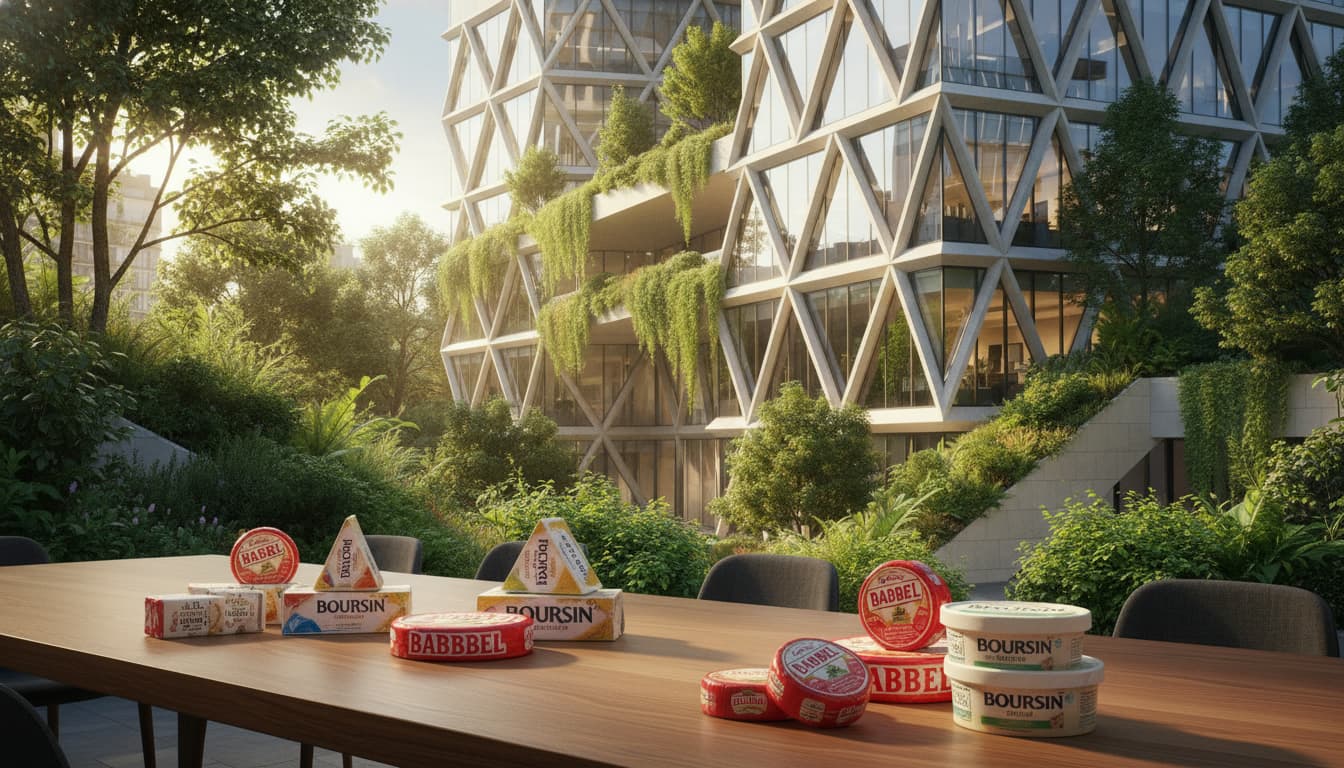
Bel’s brands are globally recognized. Among them are La Vache qui rit®, Kiri®, Mini Babybel®, Boursin®, Pom'Potes®, and GoGo squeeZ®. These products cover a wide range from processed cheeses to fruity snacks, suited for all ages and lifestyles.
2. Key figures and performance
2.1 Revenue, profit, and recent trends
The Bel Group generates significant revenue with stable growth in recent years. Its profitability rests on a strategy of diversification and continuous innovation. The company regularly invests in its industrial capacities to meet growing demand.
2.2 Geographical distribution of revenue
Present in more than 120 countries, Bel’s headquarters coordinate global activity. Most of the revenue comes from Europe, but the group is also well-established in America, Asia, and Africa, ensuring strong resilience against local market fluctuations.
3. Business model and value chain
3.1 Supply of raw materials (milk) and suppliers
Bel relies on a rigorous milk supply to ensure product quality. It favors sustainable partnerships with suppliers, incorporating social and environmental responsibility criteria.
3.2 Production, factories, and industrial capacity
With 33 production plants worldwide, Bel has significant industrial capacity. A recent €60 million investment in its Sablé-sur-Sarthe factory illustrates its commitment to modernizing its facilities and doubling production capacity by 2026.
3.3 Distribution and sales channels
Bel’s products are distributed through multiple channels: mass retail, specialized stores, and e-commerce. This diversity allows the company to reach a wide audience and adapt offers to current consumption habits.
4. Product strategy and innovation
4.1 R&D and recent launches
Research and development lie at the heart of Bel’s strategy. It invests in product innovations, notably to meet consumer expectations regarding health and convenience.
4.2 Diversification (plant-based products, snacking, premium formats)
Bel diversifies its portfolio by including plant-based products and snacks suited to modern lifestyles. This strategy aims to conquer new market segments while enhancing historic brands.
5. Corporate social and environmental responsibility (CSR)
5.1 Sustainable initiatives (packaging, energy savings)
Sustainable development is a priority for Bel. The group works to reduce the environmental impact of its packaging and improve its factories’ energy efficiency, contributing to more responsible production.
5.2 Responsible purchasing policy and animal welfare
Bel is also committed to a responsible purchasing policy, integrating animal welfare and ecosystem respect. These commitments strengthen consumer trust and enhance the brand.
To delve deeper into sustainable development in business, you can check out our article on eco-actions in business.
6. Governance and organization
6.1 Management, organizational chart, and shareholding
Bel is led by Antoine Fiévet, representing the fourth family generation heading the group. Governance combines family tradition and professional management, ensuring a long-term vision and rigorous management.
7. Competitive analysis
7.1 Strengths and weaknesses against main competitors
Bel benefits from strong brand recognition and a powerful portfolio. Its innovation capacity and CSR commitment are major assets. However, the agri-food sector is highly competitive, particularly against specialists in plant-based products.
7.2 Market opportunities and threats
Consumption trends towards healthier and more sustainable products represent an opportunity for Bel. On the other hand, raw material fluctuations and environmental regulations are challenges to anticipate.
8. Outlook and recommendations
8.1 Short/medium-term growth opportunities
Bel can capitalize on factory modernization and product diversification to strengthen its position. Developing short supply chains and digital innovation are also growth drivers.
8.2 SEO/editorial recommendations for an article about 'bel company' (target keywords, rich snippet formats, FAQ)
To optimize content about Bel Company, it’s advisable to naturally integrate main keywords such as Bel Company, Bel Company products, Bel Company history, and sustainable development at Bel Company. Using rich snippets with comparison tables or numbered lists improves visibility. Finally, a well-structured article with clear sections meets the expectations of curious internet users and professionals alike.
To better understand services related to business security, a useful addition is our article on video surveillance companies.
9. Conclusion
Bel Company is a historic French agri-food group, recognized for its iconic brands and commitment to responsible food. Its innovation strategy and sustainable development make it a key player in the sector. To learn more about entrepreneurship and best business practices, explore our resources at BugeySud Entreprendre.