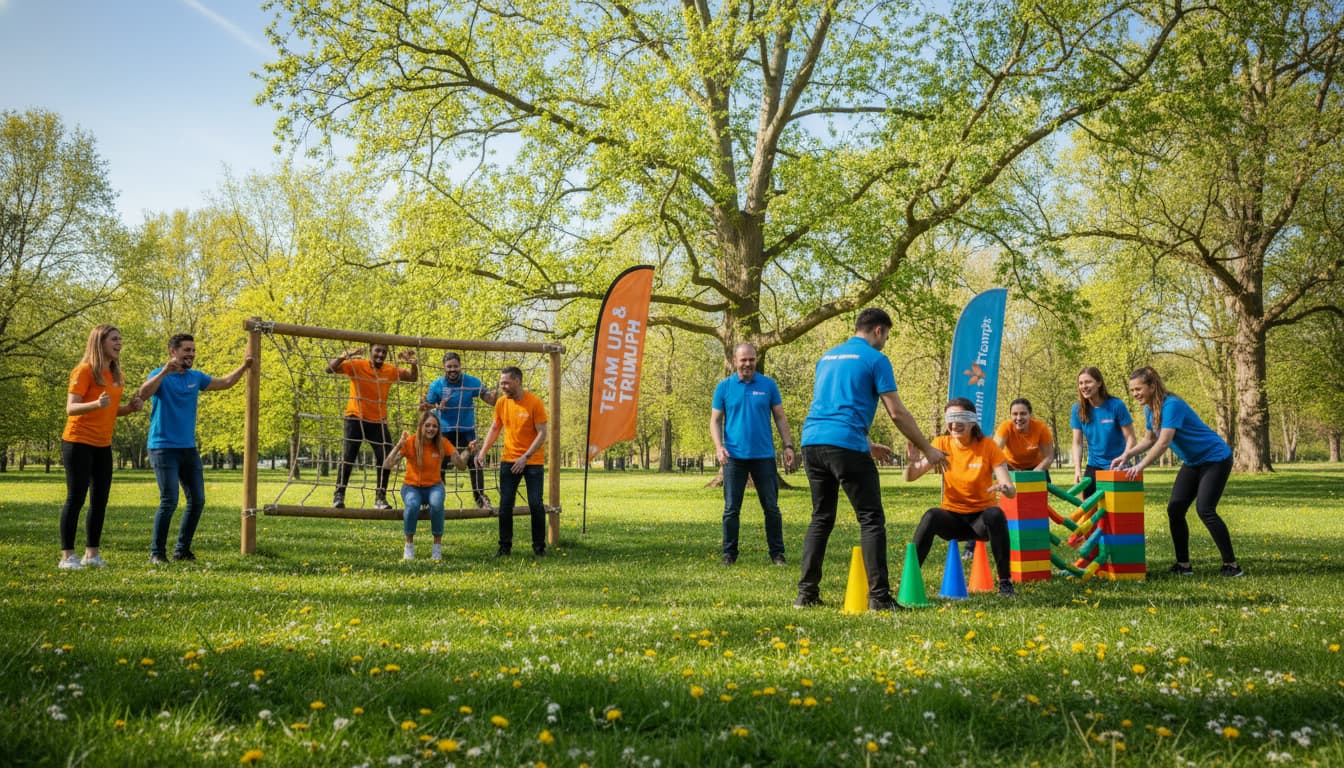
In short, what you will find in this article: practical advice to organize a successful company team building activity, a variety of ideas suited to all profiles, along with a clear method to choose, plan, and measure the impact of your event. Strengthen team cohesion while enjoying a friendly and motivating time.
1. Introduction — Why invest in a company team building activity?
1.1 Definition and main benefits (cohesion, communication, motivation)
Company team building encompasses activities aimed at strengthening bonds between colleagues. These initiatives promote team cohesion, improve communication, and boost motivation. By creating a setting different from the office, they allow employees to get to know each other better and collaborate more effectively.
1.2 When to organize team building (onboarding, project launch, annual review)
It makes sense to schedule a team building activity at several key moments: during onboarding to integrate new employees, at the start of a project to stimulate cooperation, or at the end of the year for an informal review. These milestones reinforce team spirit and collective dynamics.
2. Objectives: how to define your team building goal
2.1 HR objectives (retention, engagement)
Team building can aim to improve talent retention and employee engagement. By offering rewarding activities, the company shows it invests in the wellbeing of its teams, fostering loyalty.
2.2 Operational objectives (inter-team cooperation, problem solving)
Beyond human aspects, these activities develop cooperation between departments and collective problem solving. They provide opportunities to experience situations where collaboration is essential, thus improving overall performance.
3. How to choose the ideal activity
3.1 Consider the size and composition of teams
Group size and profile diversity influence activity choice. For example, collaborative games for companies work well with small groups, whereas olympiads or team challenges suit large groups.
3.2 Budget and value for money
Budget is a key factor. You must find a balance between cost and added value. Some low-cost or DIY (Do It Yourself) activities offer excellent alternatives without sacrificing quality of experience.
3.3 Location and format (in-person, outdoor, indoor, virtual/hybrid)
Depending on logistical constraints, choose between indoor, outdoor, or even virtual format. Hybrid activities are gaining popularity, allowing geographically dispersed teams to come together.
3.4 Safety and accessibility constraints
It is essential to check the safety of activities and their accessibility for all participants, especially in cases of disabilities or specific physical conditions.
4. Catalogue of activity ideas (classified by type)
4.1 Collaborative games and challenges (team games, construction, escape games)
- Escape games: encourage collective puzzle solving.
- Team building construction games: develop creativity and cooperation.
- Interactive quizzes: enhance mutual knowledge and communication.
4.2 Sports and adventure (hiking, obstacle courses, treetop adventure)
- Guided hikes: perfect for a friendly outdoor moment.
- Obstacle courses or treetop adventure: stimulate mutual support and self-challenge.
4.3 Creative and artistic (cooking workshops, theater, team painting)
- Cooking workshops: encourage collaboration around a common project.
- Improvisational theater: improves confidence and expression.
- Team painting: allows expressing company culture playfully.
4.4 Solidarity / CSR (volunteering, awareness workshops)
- Volunteering activities: strengthen social engagement.
- Workshops on sustainable development: raise awareness while building connections.
4.5 Well-being and personal development (yoga, stress workshops)
- Yoga or meditation sessions: improve stress management.
- Workshops on workplace well-being: promote a positive atmosphere.
4.6 Virtual and hybrid activities (online escape rooms, collaborative workshops)
- Online escape games: adapted to remote teams.
- Digital collaborative workshops: facilitate creativity from a distance.
4.7 Low-cost / DIY options
- Internally organized treasure hunts.
- Creative workshops with simple materials.
- Photo or video challenges on a common theme.
To explore these ideas further, you can check the full selection offered by Goalmap, which details innovative and responsible formats.
5. Practical organization — step-by-step checklist
5.1 Planning (date, duration, facilitators)
- Choose the date in consultation with teams.
- Define the appropriate duration (half-day, full day).
- Select an internal facilitator or a specialized provider.
5.2 Logistics (transport, meals, equipment)
- Organize transport if needed.
- Plan meals or breaks according to schedule.
- Verify availability of required equipment.
5.3 Selecting providers and contracts / insurance
- Compare several providers for the best value.
- Check insurance and contractual conditions.
6. Measuring impact and ensuring continuity
6.1 Recommended KPIs (satisfaction, NPS, business indicators)
Measure satisfaction through surveys, calculate the Net Promoter Score (NPS), and track indicators related to collaboration or productivity.
6.2 Feedback methods (surveys, interviews, observations)
Collect qualitative and quantitative feedback to assess activity effectiveness.
6.3 Post-event action plan (feedback, integration into HR strategy)
Analyze results to adjust future actions and integrate lessons into HR policy.
7. Concrete examples and case studies
7.1 Company case (objectives, process, measured results)
For example, the company Ares organized an escape game followed by a team painting workshop, which strengthened inter-department communication and improved the overall atmosphere. To learn more about this company, visit the page dedicated to company Ares.
8. Practical templates to provide (checklist, invitation email, provider brief)
- Organization checklist.
- Invitation email template.
- Standard brief for providers.
These tools simplify preparation and ensure a smooth event.
9. Conclusion and call to action
Organizing an effective company team building activity requires solid preparation and a choice adapted to your team’s needs. By combining clear objectives, varied ideas, and thorough organization, you will foster a friendly and meaningful event. To go further, explore our support resources at BugeySud Entreprendre and embark on successful team building!