In short, what you'll discover in this article: simple and concrete tips to adopt eco-friendly practices in business, quick actions to implement, sustainable strategies, as well as inspiring examples to reduce the ecological footprint at the office.
1. Introduction: Why Eco-Friendly Practices in Business Matter
Adopting eco-friendly practices in business is essential to limit the environmental impact of professional activities. These practices help reduce energy consumption, waste production, and greenhouse gas emissions. Beyond the ecological challenge, they offer economic benefits by lowering operational costs and improve the company’s image with clients and partners. Finally, they strengthen internal cohesion by engaging employees around a common cause.
2. Concrete Benefits of Eco-Friendly Practices
2.1 Economic Benefits
Good ecological practices in business allow substantial savings, notably on electricity and heating bills. For example, configuring devices on energy-saving mode or turning off equipment after use significantly reduces consumption. These simple actions also lower costs related to waste management.
2.2 Regulatory Compliance
Implementing a sustainable development policy in business helps comply with environmental regulations in force. This avoids penalties and prepares the company for future requirements, especially regarding CSR reporting.
2.3 HR Attractiveness
Green initiatives at work enhance the company’s appeal to talents sensitive to environmental issues. Raising awareness of eco-friendly practices fosters a positive work atmosphere and motivates employees to engage in a collective effort.
3. Quick and Easy Actions to Implement (Quick Wins)
3.1 Sorting and Recycling
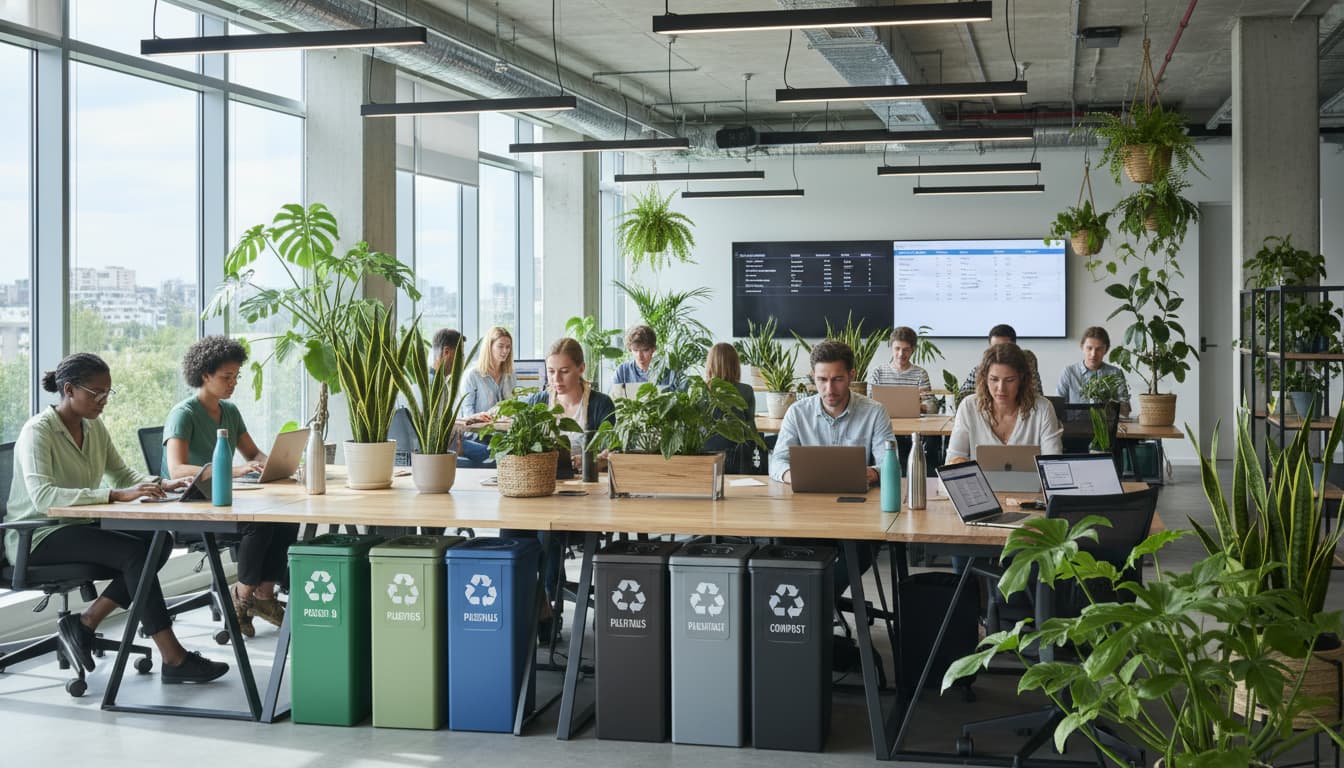
Selective sorting in business is a simple gesture to establish. Installing bins dedicated to paper, plastic, glass, and organic waste facilitates recycling and reduces landfill waste.
3.2 Reducing Printing
Limiting paper printing is an effective lever to reduce office waste. Encouraging digital use, printing double-sided, and eliminating unnecessary prints are key actions.
3.3 Turning Off Equipment
Completely turning off computers, screens, and lights at the end of the day or after inactivity reduces energy consumption. Setting standby modes to energy-saving is also recommended.
3.4 Heating/Air Conditioning Settings
Adjusting room temperatures (21°C in winter, 24°C in summer) and optimizing window insulation help reduce energy consumption linked to heating and air conditioning.
4. Structural and Strategic Actions
4.1 Responsible Purchasing
Favoring eco-responsible suppliers and choosing certified equipment (Ecolabel, EPEAT) is part of a sustainable approach. This also includes using ecological materials and recyclable packaging.
4.2 Sustainable Mobility
Encouraging sustainable mobility for employees, such as carpooling, biking, or public transportation, reduces the carbon footprint related to business travel.
4.3 Eco-Responsible Office Layout
Designing offices to enhance natural light, with green plants and durable materials, improves well-being while limiting environmental impact.
4.4 CSR Policy
Integrating eco-friendly practices into a global CSR policy structures actions, involves all stakeholders, and highlights the company’s efforts.
5. Digital and IT Eco-Friendly Practices
5.1 Workstation Management
Optimizing workstation settings, such as screen brightness and disabling unnecessary connections (Wi-Fi, Bluetooth), reduces energy consumption.
5.2 Server/Cloud Optimization
Reducing server and cloud consumption through efficient data management decreases the environmental impact of digital technology.
5.3 Efficient Archiving and Storage
Deleting unnecessary files, organizing document archives, and avoiding heavy email attachments are responsible digital practices.
6. Employee Engagement
6.1 Training and Communication
Training and raising employee awareness about eco-friendly practices encourages adoption. Simple materials and practical sheets can be distributed to support this effort.
6.2 Ambassadors
Appointing eco-responsible ambassadors in each department helps maintain momentum and relay best practices.
6.3 Challenges and Gamification
Organizing challenges or games around eco-friendly actions stimulates collective engagement and makes the approach fun.
7. Measurement and Monitoring
7.1 Key Indicators
Defining precise indicators (energy consumption, waste volume, recycling rate) measures progress made.
7.2 Monitoring Methodology
Setting up regular monitoring with periodic reports helps adjust actions and sustain motivation.
7.3 Internal/External Reporting
Communicating results internally and, if possible, externally values efforts and strengthens the credibility of the approach.
8. Implementation: From Diagnosis to Action Plan
8.1 Conducting an Audit
An initial diagnosis identifies priority improvement areas and action levers.
8.2 Prioritizing
Ranking actions by impact and feasibility facilitates planning.
8.3 Budget and Schedule
Allocating an appropriate budget and defining a realistic timeline ensure project success.
8.4 Examples of Action Plans
Clear and detailed action plans, including precise objectives, ease implementation and monitoring.
9. Practical Cases and Concrete Examples
9.1 Small Businesses
Even with limited means, small companies can adopt simple eco-friendly practices such as selective sorting and reducing printing.
9.2 Large Enterprises
Large companies often have resources to deploy ambitious CSR policies, including sustainable mobility and responsible purchasing.
9.3 Quantified Results
Some companies have managed to reduce their energy consumption by 20% and their waste by 30% thanks to these initiatives, demonstrating their effectiveness.
10. Common Mistakes to Avoid and Practical Advice
- Not involving employees from the start can hinder buy-in.
- Avoid actions that are too complex or costly without prior evaluation.
- Do not neglect regular communication to maintain engagement.
- Underestimating the importance of monitoring and measuring results.
11. Final Checklist and Resources
To succeed in your eco-friendly business approach, here is a list of actions to verify:
- Implement selective sorting and raise team awareness.
- Reduce printing and optimize digital use.
- Turn off equipment at the end of the day.
- Adjust heating and air conditioning responsibly.
- Promote responsible purchasing and sustainable mobility.
- Train employees and appoint ambassadors.
- Monitor key indicators and communicate results.
For more details, you can consult Eco-Friendly Practices to Adopt at Work - IJ HDF, which offers a clear and motivating list of simple actions to put in place.
Finally, to better understand how to integrate these practices into your entrepreneurial project, discover our article on the site presentation and advantages and the advantages of the site.
Adopting eco-friendly practices in business is accessible to everyone, with concrete and easy-to-implement actions. By engaging your employees and structuring your approach, you will contribute to a more sustainable future while optimizing your resources. Don’t wait any longer to start your eco-responsible project!